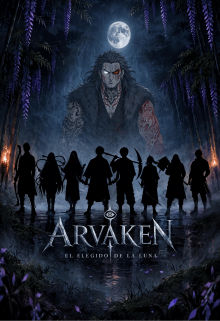
Arvaken English Version
Chapter 3: The Serpent Clan
Chapter 3: The Serpent Clan
The Serpent Clan settlement rises among the slopes of a mountainous forest, where the wooden dwellings are distributed at different heights and connected by stone paths that wind through the vegetation. The sloping roofs, exterior staircases, and small platforms make use of every corner of the slope, while green flags, adorned with the symbol of the Serpent, flutter above the houses. In the center of the village there is a circular plaza with a stone fountain, whose center is crowned by a serpent sculpture that seems to emerge from the water. There, the inhabitants trade, converse, and share their daily lives.
Above the dwellings, in the highest part of the settlement, stands the Sanctuary of the Jaws. Its entrance, carved in the shape of an enormous serpent's head with its exposed fangs, overlooks the staircases that lead to the sacred enclosure. It is not a place open to just anyone's curiosity: its doors are reserved for specific ceremonies, and those who inhabit the settlement respect its rules. Around the houses are small gardens of medicinal plants, tool workshops, and training areas. The village is not separated from the forest by great walls; its inhabitants know the trails, the water sources, and the dangers of their territory, and they have learned to coexist with them.

The Serpent Clan's culture was born from a deep relationship with poison, medicine, and survival. Its members believe that knowledge can be as dangerous as any weapon, but also that, when used properly, it can save lives. From an early age, they learn to recognize the plants in their surroundings and distinguish those that can be used to treat wounds from those that are toxic. Among the species they cultivate are calendula, traditionally used to prepare ointments; plantain, used in remedies for the skin; and lemongrass, valued for its aroma and everyday uses. They also study plants native to the clan, such as the Green Viper, an herb with elongated leaves that healers investigate for its medicinal properties, and Rock Blood, a reddish plant that grows among the cracks in the mountains and requires careful handling. The clan distinguishes between medicinal knowledge passed down through generations and dangerous substances that only specialists should handle.

Their philosophy can be summed up in one idea: knowing danger is the first step toward surviving it. The Serpent represents adaptation, resilience, and the ability to seize an opportunity when it arises. For this reason, the clan's warriors study their adversaries, prepare their resources, and strive not to waste their strength in unnecessary confrontations. They do not believe that retreating is always a sign of weakness; sometimes, stepping back allows them to better understand the enemy and return under favorable conditions. To them, recklessness is not bravery, but a lack of understanding of the consequences.
This way of thinking is also reflected in their customs. Families share their knowledge of plants and remedies, warriors teach the young what they have learned on the training grounds, and healers hold a respected place within the community. Every year, the inhabitants dedicate a day to renewing their gardens, checking their medicinal supplies, and repairing the structures. When they finish, they gather in the plaza to share food and remember that the survival of the clan depends as much on its warriors as on those who keep the settlement alive.

When young people begin their training, they participate in the Scale Ritual, held in a wooden and stone enclosure near the training areas. During the ceremony, the instructors, who are the same healers, present three elements: water, which represents life; medicinal plants, a symbol of knowledge; and an empty vessel, which serves as a reminder of everything that still remains to be learned. The aspirants receive their first teachings on the responsibility of using their abilities and pledge not to endanger their own people out of pride or recklessness. At the end, they receive a small token bearing the clan's symbol. This ritual marks the beginning of their preparation, but it does not grant them the spiritual mark.
Years later, when they have reached the necessary level of preparation, they may take part in the Ecdysis Trial, the challenge that determines whether the ancestral spirit of the Serpent chooses to mark them. The trial takes place in an isolated area, prepared to test their ability to face dangers and make decisions under pressure. The aspirants must overcome obstacles, recognize risks, and adapt when their initial strategies stop working. Being strong or knowing many techniques is not enough: they must demonstrate that they know how to use what they have learned without allowing themselves to be overcome by recklessness.
Editado: 11.11.2026

Recomendaciones de libros,Códigos promocionales y Descuentos
Suscríbete al canal Booknet en Telegram y sigue los mensajes